
Hudspeth County Projected and Actual Release Dates
A projected release date is a calculation, not proof that a person walked out of custody. In the TDCJ system, it reflects the sentence, offense date and type, time credits, mandatory-supervision eligibility, and other record data. Depending on the case, the field may point toward a possible mandatory-supervision date or toward discharge. It can move when the underlying inputs change.
A scheduled release date is more developed. TDCJ enters it after approval and processing have advanced far enough to identify a planned day and location. Even then, a warrant, detainer, sentence correction, unfinished program, or other condition can delay or redirect the event. The actual release record is created after the movement occurs and should show whether custody ended in the community, parole, mandatory supervision, transfer, or discharge.
Scheduled versus actual release: a date displayed before release is a plan. Confirm the completed movement with TDCJ or the Hudspeth County jail, and ask whether another agency took custody.
Pretrial detention works differently. A person held on an unresolved Hudspeth charge does not have a sentence-based projected date. Release may depend on posting bond, a judge changing conditions, dismissal, disposition, or resolution of another hold. A docket can reveal the legal order, but only the jail movement record establishes when the person physically left.
Find a Hudspeth Projected Release Date
Begin by identifying the current custodian. A transfer from Hudspeth County Jail to TDCJ is not a release to the community. Likewise, a person moved to a federal, immigration, or another county facility belongs to that receiving system for current status.
- Confirm the system. Call Hudspeth County Jail at (915) 369-2161 when the custody path is unclear. Ask whether the booking ended in community release or transfer.
- For TDCJ custody, search official records. Use the TDCJ Offender Search. An exact seven-digit TDCJ number or SID number is best. Otherwise use the name with age, birth information, or county of conviction to separate similar records.
- Open the individual detail. Read the status, offense, county, projected release date, parole eligibility information, and any scheduled release date or location. Record the date on which the page was checked.
- Use another TDCJ channel if needed. The official email instructions allow a request using the full name and TDCJ number, or exact birth date or approximate age and conviction county when the number is unknown. TDCJ says this general information is free.
- For a county sentence, request the local computation. Ask the jail for its written calculation and obtain the signed judgment and jail-time credit from the Hudspeth County and District Clerk. Do not import a TDCJ formula into a county case.
- Verify the completed event. A release date on screen is not a substitute for the release or movement record.
The Hudspeth County released-inmate guide covers the full search path when the correct custodian is still uncertain.
The TDCJ email page shows the identifiers used for an official projected-date inquiry. Its captured interface provides a useful reference:
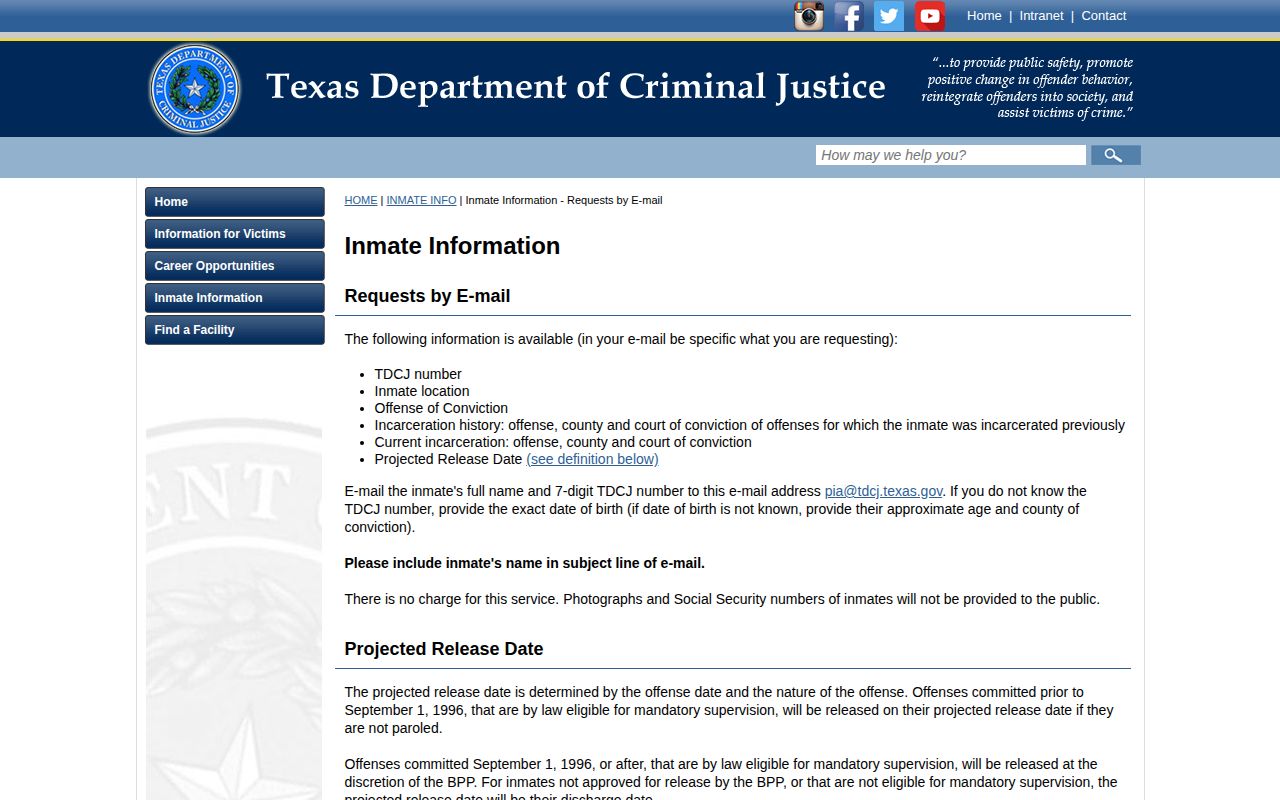
This source is for state custody. It does not calculate a date for a Hudspeth pretrial booking or a locally served county sentence.
Texas Good Time Release Calculations
Texas good-conduct time is not a simple reduction of the sentence pronounced by the court. Government Code § 498.003 applies it to parole or mandatory-supervision eligibility and states that it does not otherwise reduce the sentence term. Section 498.004 permits forfeiture. Classification, disciplinary history, and the governing statute therefore matter to the displayed calculation.
For eligible mandatory-supervision cases, calendar time plus accrued good-conduct time may reach the maximum term under Government Code §§ 508.147 through 508.149. Section 508.149 excludes listed offenses and findings. For the post-1996 framework, reaching a mathematical date also does not erase the Board’s discretionary review. A projected field may ultimately function as a discharge date if mandatory supervision is unavailable or not approved.
Parole eligibility is another date, not a release promise. Section 508.145 contains different formulas based on offense, sentence, offense date, deadly-weapon findings, and other features. Some listed serious cases require substantial actual calendar time, while other calculations may combine calendar and good time. Capital, life, aggravated sexual assault, trafficking, and other categories receive distinct treatment.
Good-time note: Texas has no honest universal rule that every prisoner serves 85 percent. Apply the controlling statute and TDCJ’s audited calculation to the individual record.
State-jail felonies also resist shortcuts. Penal Code § 12.35 establishes the punishment range, while diligent-participation credits and court action may affect a case under current law. A county jailer must credit confinement and follow the judgment. Because Hudspeth County publishes no local good-conduct calculation policy, ask for the written computation rather than using an online calculator.
Why a Hudspeth Release Date Can Change
Several independent events can move a calculation or prevent release to the community:
| Factor | Possible effect |
|---|---|
| Disciplinary forfeiture | Loss of good-conduct time can move an eligibility or projected date later. |
| Sentence audit or correction | Classification and Records may correct credit, offense data, or concurrent and consecutive sentence treatment. |
| Parole action | Approval begins more processing; denial or a later review does not create release. |
| Mandatory-supervision review | Eligibility alone may not produce approval under the applicable Texas framework. |
| Program requirement | A required treatment or pre-release program can delay scheduling. |
| Detainer, warrant, or hold | The person may transfer to another agency rather than enter the community. |
| Court order | An amended judgment, new sentence, credit order, reversal, or other ruling can change the basis for custody. |
| Release-plan issue | Residence review, county-of-residence rules, or special conditions can delay final processing. |
TDCJ’s official definitions help separate status and release fields. The captured definitions page should be read with its observation date because agency wording and individual calculations can change:
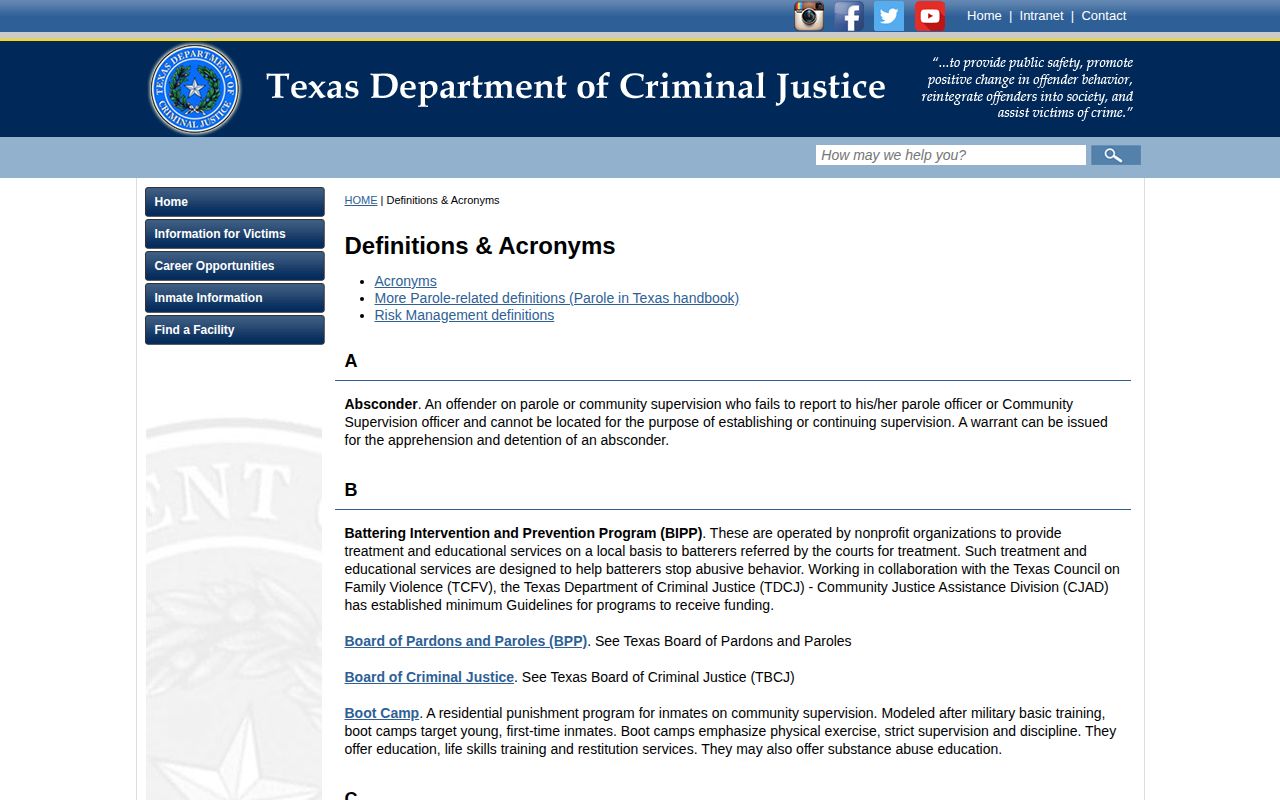
The labels clarify the record, but the current person-specific detail and agency confirmation remain controlling.
From Board Approval to Physical Release
A favorable Board vote is one step, not the gate event. TDCJ Review and Release Processing checks the residence proposal, county-of-residence rules, discipline, program prerequisites, detainers, and special conditions. Classification and Records audits the sentence and certificate. This explains why an approval code may appear before a scheduled date and why the schedule can still change.
TDCJ guidance indicates that calculation of a scheduled release after the certificate is received may take roughly 14 to 21 business days. That is not a deadline or a Hudspeth jail rule. It is a state-prison processing estimate, and the agency warns that a planned date may change even on that date.
Once approved, a state release may occur on parole or mandatory supervision while the sentence remains active in the community. Maximum expiration or flat discharge is different because it represents the end of the sentence calculation, subject to the authoritative audit. A person can therefore be “released” yet remain under legal supervision.
The TDCJ release-types page shows the distinctions used by the Parole Division:
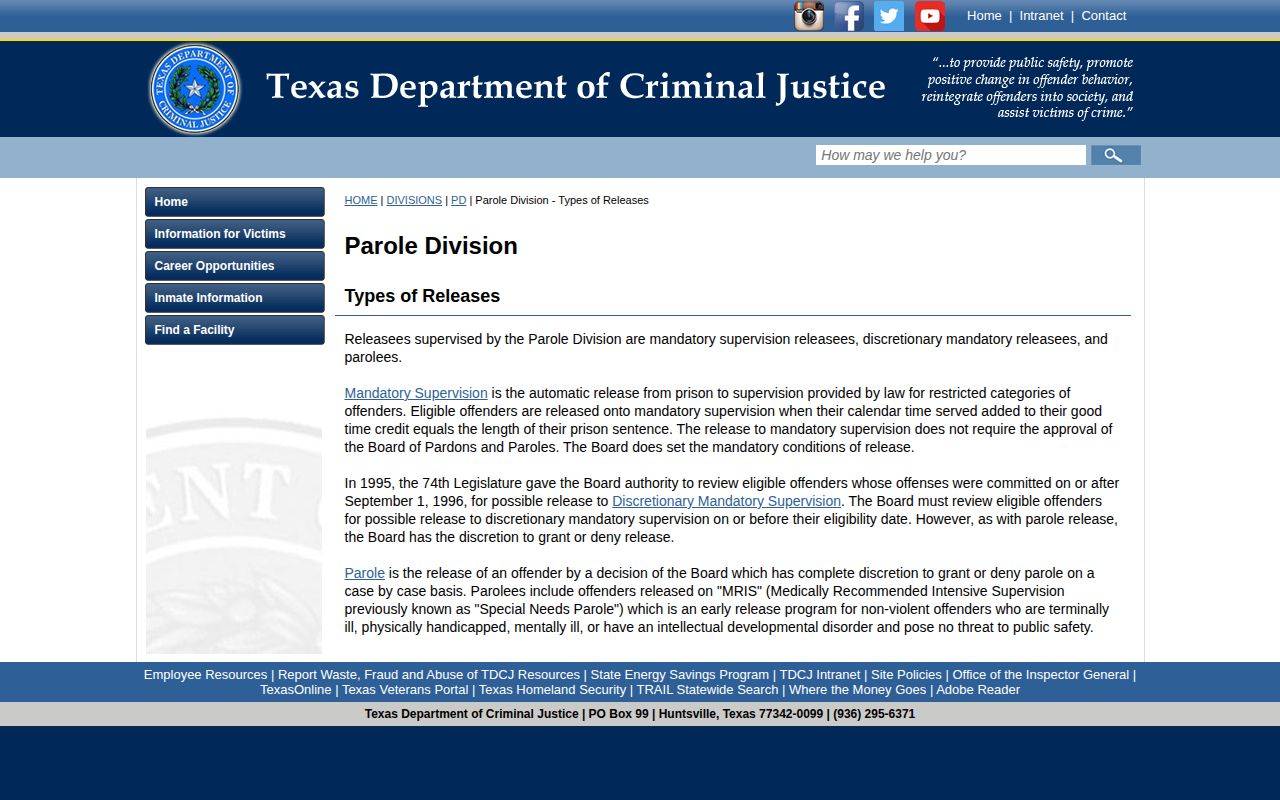
Use the release type with the status and actual movement record instead of treating any one date as a complete history.
Hudspeth Has No Weekend Formula
No Hudspeth County policy was found that promises Friday advancement, a particular hour, or special weekend and holiday handling. A calendar date alone cannot show whether staff must first process a court order, transport, warrant, or administrative step. The jail operates continuously, but records staff and courts may follow business schedules.
Ask the jail for the calculated date and the expected physical process. The useful question is not merely “What day does the sentence end?” It is also “Does any court order, outside hold, transport plan, or closure affect when and where this person leaves?” That distinction is especially important in Hudspeth County, where a person can move into TDCJ, federal, immigration, or another county custody.
TDCJ publishes its own prison-release logistics, generally weekday business-hour processing outside holidays, but those rules must not be copied onto Hudspeth County Jail. Likewise, TDCJ release clothing, transportation vouchers, trust balances, and payments under Government Code § 501.015 are state-prison provisions. Hudspeth County has published no parallel promise.
Confirm a Hudspeth County Release Event
For county custody, ask the jail whether the booking ended in community release or movement to another authority, then request the existing release record. For TDCJ custody, compare the current offender detail with agency information and the final release history. Notification can supplement those checks.
Texas now uses Texas IVSS-Counties for county notifications and a related TDCJ IVSS portal for prison and parole events. The Texas IVSS inmate-check guide explains the separate systems and alert limits. A notification is helpful, but delivery delay or source-data lag means it should not replace direct verification.
When speaking with an office, provide the exact name, date of birth when appropriate, and booking, SID, or TDCJ number. Ask for the status, the kind of date displayed, the authority responsible for the next movement, and whether a detainer exists. Record when the answer was given. That disciplined approach avoids turning a changing projection into an unsupported promise.
For a Hudspeth County Jail sentence, pair three records. The signed judgment states the punishment and may show jail-time credit. The jail’s calculation applies the judgment and its lawful credit rules. The movement record then documents the actual date, time, type, and destination of departure. None of those documents alone answers every question. If they conflict, ask the clerk and jail to identify the source of the difference instead of choosing the most favorable date.
For a state prisoner, distinguish the parole eligibility date, projected release date, scheduled release date and location, and maximum expiration or discharge. Eligibility means review may occur. Projection is a statutory calculation. Scheduling indicates that processing has progressed, while maximum expiration concerns the end of the sentence calculation. Parole or mandatory supervision changes custody to supervised life in the community and does not necessarily discharge the sentence.
A transfer destination is particularly important in this border county. A Hudspeth booking can end through movement to TDCJ, another county, a federal authority, or immigration custody. The county record may accurately say “released” because its booking closed, even though the person never entered the community. Ask “released to whom?” and then check the receiving authority before treating the date as freedom from custody.
Finally, preserve the observation date for every online result, agency email, and telephone confirmation. Dynamic records are snapshots. If the planned day is near, call the responsible unit before traveling and recheck for holds or processing changes. Afterward, request the completed record so a projected event is not mistaken for an actual one.