
Hudspeth 72-Hour List Status
Neither official Hudspeth sheriff domain offered a 72-hour feed during the August 2026 review. There is no documented URL, update cycle, set of displayed fields, booking-photo feature, or online retention window. The independent Sheriff's Office site shows a “Jail” control without a destination, and the county sheriff page is a directory rather than a roster. No official sheriff app was advertised.
Three saved snapshots of a current roster would not create a valid release list. That method could miss a person who appeared and disappeared between checks, and it would not reveal whether the booking ended through bond, time served, dismissal, a court order, or transfer. A three-day claim needs a movement event with a date and reason.
Build a Hudspeth Three-Day Record
Begin by setting an exact date range. Then identify the booking by full name, booking number, and arrest date if known. Ask the jail whether that booking ended within the range and whether the result was a community release or a transfer. A written request should seek existing records, not require staff to create a custom 72-hour report.
- Define the three calendar dates and time zone.
- Call the jail at (915) 369-2161 for initial status.
- Submit a written request for the identified booking's movement record.
- Retrieve the docket sheet and relevant signed order.
- Check the named receiving agency after any transfer.
The Texas Attorney General's request guidance explains how to seek public information from a governmental body. The captured guidance below is useful for a Hudspeth release request because the county has no self-service three-day feed.

A clear request reduces delay: name the record, booking, date range, desired electronic format, and fields sought.
Hudspeth Release Record Fields
Hudspeth has not published the jail software's field names. The following are request targets drawn from the research, not a promise about a public display. Their value lies in linking the physical movement to its authority and next destination.
| Field to request | Record question |
|---|---|
| Name, aliases, booking number | Which booking is involved? |
| Booking and arrest date | When did county custody begin? |
| Release or movement date and time | Did it fall inside the 72-hour range? |
| Release reason or disposition | Was it bond, time served, order, or transfer? |
| Releasing authority | Which office authorized the action? |
| Destination agency | Where should continued custody be checked? |
Request the booking photograph separately if needed for identity because the inspected official sites do not publish one. An agency may withhold or redact information under an applicable exception. Ask for a cost estimate if charges will exceed the statutory notice threshold, and do not confuse a response delay with loss or destruction of the record.
Reconcile Hudspeth Court Events
The County and District Clerk links the iDocket judicial search and supplies criminal-record request routes. Ask for the docket sheet, charging instrument, judgment, sentence, bond or dismissal orders, commitment or release orders, and any mandate or discharge-related filing that exists. A court order identifies the legal event. It does not prove the hour the jail finished processing or that no other hold remained.
Compare three sources. The jail movement sheet answers when and how the person left. The signed court record answers what authorized or followed the change. A receiving record answers whether “release” actually meant transport into TDCJ, another county, federal custody, or immigration custody. Agreement among those records supports a sound conclusion.
- Bond
- Pretrial liberty subject to conditions; the charge is not thereby dismissed.
- Time served
- A sentence outcome that may still be followed by another hold.
- Transfer
- Movement between custodians, not freedom.
- Discharge
- Completion of a sentence or supervision obligation.
Hudspeth Weekend Release Checks
A 72-hour range often spans days when clerk and records counters have limited availability. Start with the jail for present status, but preserve the date range for the later written request. If a bond order was signed Friday and the movement sheet shows release Saturday, both records explain the sequence. If the order changed but the person remained because of another warrant or detainer, the court event alone does not establish physical release.
A no-result in a county notification portal or other search is also inconclusive. Names may differ, a participating agency may update later, or the person may have moved to a system that uses another identifier. The three-day approach is meant for careful reconciliation, not an estimate based on web visibility.
For an urgent same-day event, follow the 24-Hour Release List phone-first process. The broader Hudspeth released-inmate search covers state, federal, and immigration paths for a named person.
Hudspeth’s Empty Jail Control
The sheriff site's “Jail” control is a locally distinctive source of confusion. It is a JavaScript placeholder, not an inmate roster or 72-hour release URL. The county directory has no roster either. That dual absence is why an official-looking commercial result cannot substitute for a Hudspeth County movement record.
Use the control's failure as a routing clue, not as evidence about a person. Move to the sheriff's phone, the county's written-request channel, the clerk's court file, and any named receiving authority. Recheck official pages before each future search because coverage can change, but never invent a feed cadence or archive period.
Note: Hudspeth's absent web list does not shorten the legal retention period for underlying records.
Retaining Hudspeth Release Records
Online visibility and legal retention are different. Hudspeth offers no public roster window from which a retention period can be inferred. Texas local records are governed by record-series schedules and the nature of each item, while Public Information Act exceptions can restrict disclosure even when a record still exists.
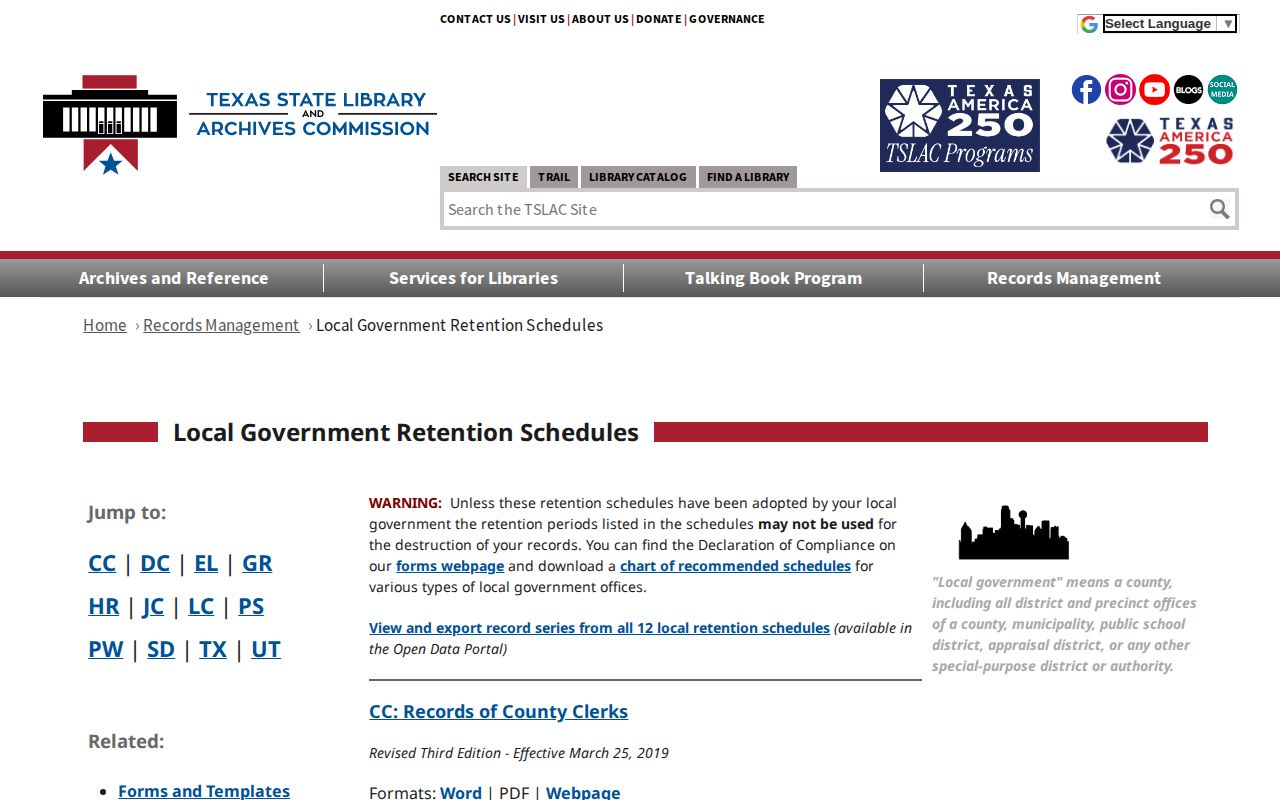
The Texas State Library's local-government retention resources are shown below. They provide the right framework for the record custodian, but they do not create a universal 72-hour archive.
Keep the agency response, request date, stated date range, and cited exceptions together so later comparisons use the same record scope.
Resolve Hudspeth Record Conflicts
A multi-day review may reveal dates that seem inconsistent. That does not always mean one source is wrong. A judge may sign an order before jail staff finish checks, property return, and transport arrangements. A receiving agency may post its own admission after the Hudspeth movement time. Different systems can also use “release” for leaving one custodian even when another immediately takes control.
Keep each timestamp tied to its source and label. Ask the jail for the physical release or transfer time, the clerk for the signed order and file date, and the receiving agency for its admission record. If a conflict remains, request clarification from the office that created the disputed field. Do not average dates or choose the earliest one simply to fit the 72-hour range. The sound result may be a documented sequence rather than one universal release time.
Public Record Search
Sponsored Results